Indirect Procurement Best Practices Assessment
An Indirect Procurement Best Practices Assessment is a valuable process for organizations to evaluate and optimize their indirect procurement functions. Indirect procurement refers to purchasing goods and services not directly related to producing a company’s core products or services. These goods and services include office supplies, IT equipment, marketing services, maintenance, and more. Elements of


 1 Files
 25 Purchases
 Unlimited access, anywhere, anytime
 Upgrade to Student or Pro plan to avail more discounts and perks
Files
- Indirect Procurement Best Practices38.81 KB

An Indirect Procurement Best Practices Assessment is a valuable process for organizations to evaluate and optimize their indirect procurement functions.
Indirect procurement refers to purchasing goods and services not directly related to producing a company's core products or services. These goods and services include office supplies, IT equipment, marketing services, maintenance, and more.
Elements of Indirect Procurement Assessment
This assessment has 70 assessment questions in the following 7 Categories:
- 1.Procurement Policies and Procedures
- 2.Category Management and Sourcing Management
- 3.Spend Management
- 4.Supplier Management
- 5.Contract and contract Management
- 6.E-procurement / Digitization
- 7.Risk Management
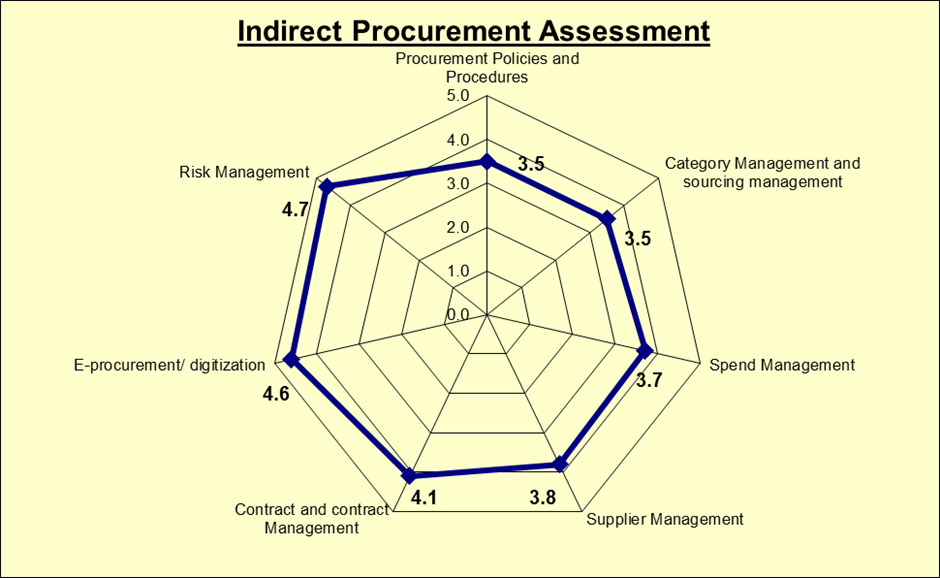
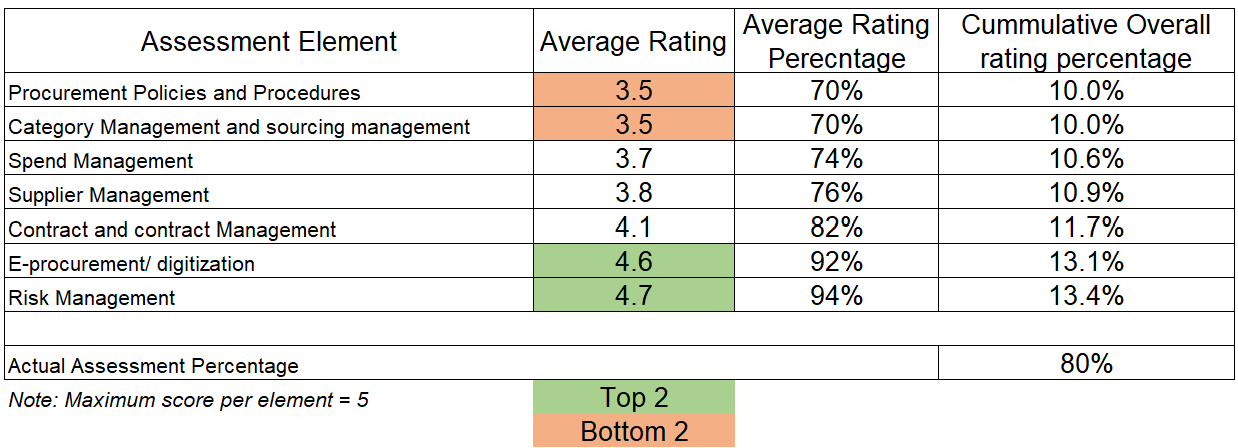
This Assessment Tool includes a tab to identify the Opportunities for Improvement, Skills Requirements, and Support Needed, and notes critical comments and observations.

The tool also shows a score of each assessment element and the overall rating.
Why You Should Buy Indirect Procurement Best Practice Assessment
Conducting an Indirect Procurement Assessment offers several benefits:
Cost Savings: An assessment helps identify cost-saving opportunities, such as consolidating suppliers, negotiating better terms, or implementing cost-effective procurement strategies.
Supplier Relationship Management: By evaluating supplier performance, organizations can strengthen relationships with key suppliers.
Process Efficiency: Assessments can uncover inefficiencies in procurement processes.
Risk Management: Identifying potential risks in the supply chain allows organizations to proactively manage these risks and establish contingency plans.
Compliance: Assessments can ensure that the organization is complying with relevant regulations and internal policies.
Improved Visibility: Better visibility into procurement activities and spending allows for more informed decision-making.
Benchmarking: An assessment provides a basis for benchmarking against industry standards or best practices.
Enhanced Strategic Focus: By optimising indirect procurement, organisations can free up resources and personnel.
Data-Driven Decision-Making: An assessment typically involves data analysis.
Continuous Improvement: Regular assessments can drive continuous improvement.
In Summary,
Conducting this Indirect Procurement Assessment can lead to significant benefits, including cost savings, supplier relationship improvement, process efficiency, risk management, compliance, enhanced visibility, and strategic focus.
If you are a SCMDOJO Pro Member, you can download the tool using your monthly credits.
In addition to this Indirect Procurement Assessment Tool, you will find other useful assessment tools and best practices created by SCMDOJO .
Bundle Offer with this Assessment
All below products for procurement professionals will be added at 50% of the listed cost in the Bundle Offer in our Gumroad Shop.


